13,500 HDB Flats Hit MOP in 2026 — and Renters Are Finally Gaining Leverage
A record ~13,500 HDB flats hit their Minimum Occupation Period in 2026, nearly double last year. The extra supply is slowly giving renters more bargaining power in Punggol, Queenstown and Tampines North.
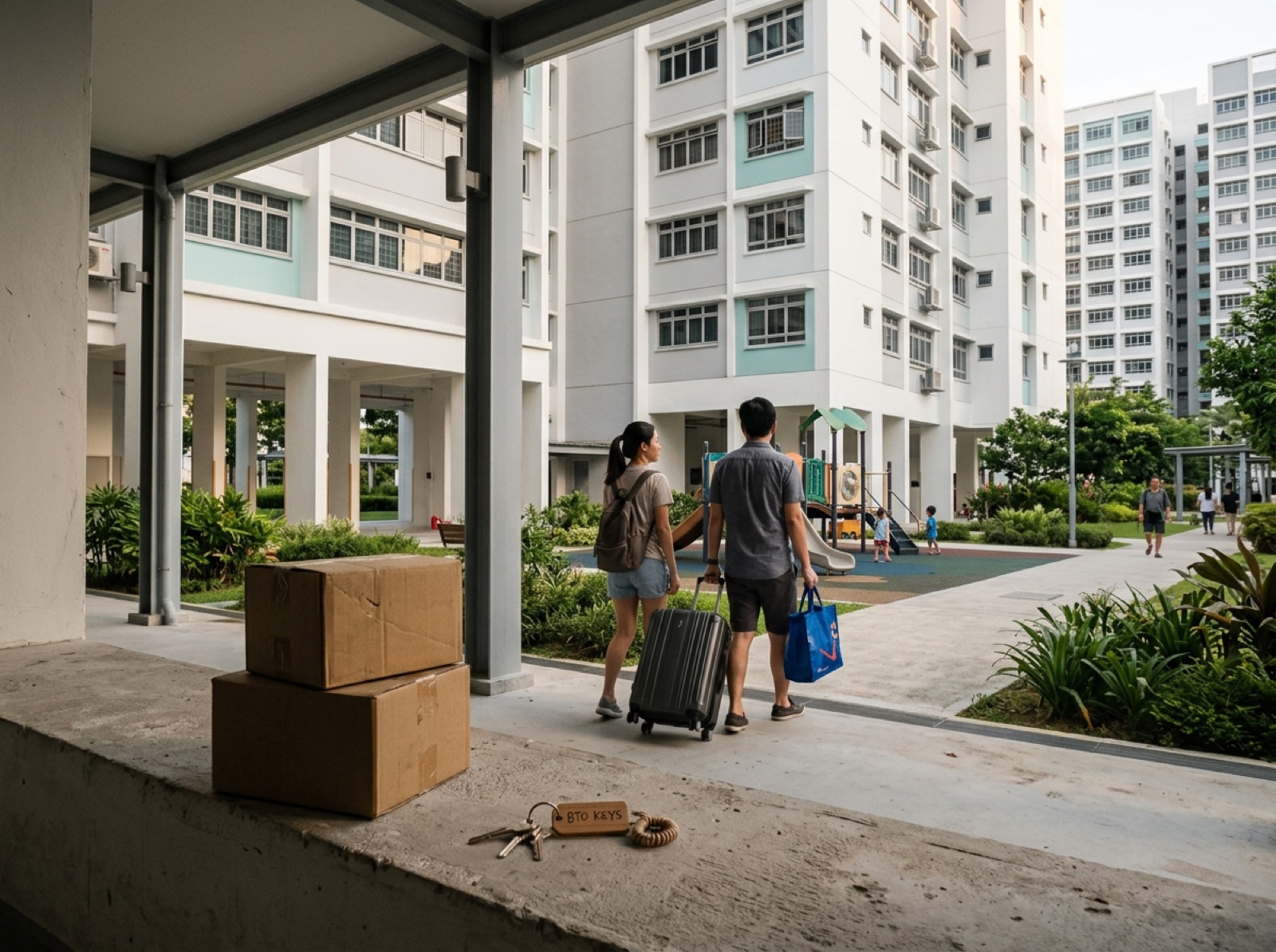
For most of the past three years, renting in Singapore meant having almost no say. Lease renewals arrived with a number already attached, and a tenant who pushed back could be replaced within days. In 2026, that is finally starting to change — and the reason is supply.
What's changing: a record wave of flats
In public housing, owners must live in their flat for a Minimum Occupation Period (MOP) of five years before they are allowed to sell it or rent out the whole unit. Because of the Build-To-Order building boom a few years ago, an unusually large batch of flats is reaching that five-year mark right now.
Roughly 13,500 HDB flats are expected to reach MOP in 2026 — nearly double the roughly 6,970 that did so in 2025. The wave keeps building after that: about 18,900 flats in 2027 and 21,400 in 2028, or close to 54,000 over three years.
The supply is not spread evenly. It is concentrated in Punggol, Queenstown (home to the Dawson “Sky” flats) and Tampines North, with a sizeable share in Bidadari — and it is mostly larger four- and five-room homes, which are exactly the flats many families look to rent.
Rents are already starting to cool
The latest figures hint at the shift. In August 2026, overall HDB rents slipped 0.7% from July, with executive flats down 2.5% and four- and five-room rents down 0.8%. Mature estates eased 0.5%, while non-mature estates fell a little more, by 1%. Rents are still higher than a year ago, but the climb has slowed to a crawl.
The private market tells a similar story. Condo rents were flat in August, and rental volumes for both condos and HDB flats fell from July’s highs. Analysts expect HDB rents to hold broadly steady through 2026, growing by just 1% to 3% at most.
Why more supply gives renters leverage
For a landlord, renting out a flat is a simple trade-off: a slightly lower rent usually beats leaving the unit empty for two months. When several near-identical flats in the same block or estate are all looking for tenants, that trade-off tilts in the renter’s favour.
Newly MOP-ed flats also reset the benchmark. A newer unit in the neighbourhood sets an anchor price, which pressures older, more dated flats nearby to compete on rent. In the east, for example, tenants can point to the 2,000-plus flats reaching MOP around Tampines North when discussing price.
The fine print: it's not a free-for-all
Two caveats matter. First, reaching MOP does not automatically put a flat on the rental market — many owners choose to sell, or simply keep living in their home. Second, the effect is uneven: established, tightly held estates such as Bishan and Marine Parade may barely feel it.
Demand has not vanished either. Leasing activity is still supported by expatriate tenants and steady HDB rental applications. So this is a market that is rebalancing, not collapsing — more choice and more room to negotiate, especially in the estates where new supply is piling up.
What renters — and landlords — should do
- Renters: before you renew, check what similar flats in your block or estate are actually asking, not just what your landlord says the market is. Use the MOP supply and the range of nearby asking rents as your reference point, and negotiate on both rent and lease flexibility.
- Landlords: price realistically. In an estate with dozens of similar units available, a competitive rent usually beats holding out and absorbing a long vacancy.
The bottom line
For the first time in years, Singapore tenants have genuine bargaining power — but only where the new supply has landed. Do your homework, know your estate’s numbers, and use them.